
How to Search Civil Dockets
Begin with CaseLook, the public computer-record search that covers Common Pleas and the choice the vendor labels Municipal Court, which county government calls Monroe County Court. You can search a civil matter by party name, a numbers-only case number, or a File Date. Unsure of the court level? Leave both court boxes checked. The county cautions that postings can trail filings or judicial action by at least 24 hours.
County Court takes the smaller civil claims, small claims, and evictions. Common Pleas carries the general and higher-value civil route. Estates, guardianships, and other probate matters sit in separate Probate record channels. If a search comes back empty, try the other division, switch search criteria, then call the court.
- Identify the likely court from the papers or case type.
- Open CaseLook and acknowledge its delay notice.
- Search by Name/Company, numeric Case Number, or File Date, choosing both courts if unsure.
- Contact the court that holds the file for a current setting or an official document.
Monroe County Civil Search Limits
CaseLook offers no civil case-type dropdown. There is no attorney, document, courtroom, status, or charge filter either. The form itself gives you Name/Company, Hearing Date, Case Number, File Date, Ticket Number, court checkboxes, match-count choices, and a CAPTCHA. So the practical civil search paths are name, date, and number, not case category.
The CAPTCHA blocks any promise about what a civil result screen displays. Filings, orders, judgments, exhibits, and images may or may not appear there. Treat CaseLook as a lead only. Copy requests and access questions go to County Court, the Clerk of Courts, or Probate/Juvenile. It depends on the matter.
The posted notice repeats the lag warning. Online computer record information can trail filings or judicial action. The lag can run at least 24 hours or longer. A brand-new complaint, transfer, or order may still need a direct court check. Even a form that accepts your name or date does not change that.
What a Civil Docket Shows
A civil docket is the running court record of activity in a civil case. The entries appear one by one in order. What the search form proves is only its own fields. It does not prove the content of any returned CaseLook record. So a case number or search hit is not proof of a complete online case file. Filings and certified copies are simply different levels of access to the court record.
| Name/Company | Optional CaseLook field, maximum 30 characters, with a last, first middle entry note. |
|---|---|
| Case Number | Optional numeric-only field, no letters and no more than 12 characters. |
| File Date | Optional month, day, and year criterion for a civil search. |
| Hearing Date | Optional search control, subject to the local posting-delay warning. |
| Court choice | Common Pleas Court and vendor-labelled Municipal Court checkboxes. |
Monroe County Civil Docket Limit
R.C. 1907.03 gives Monroe County Court original civil jurisdiction up to $15,000. The County Court Civil Actions page applies that same local ceiling. Anything above the line belongs in the Common Pleas civil route. Ohio law gives that route broader jurisdiction.
That split should shape any docket search. County Court holds the smaller civil files, while Common Pleas takes the major civil route. Probate is not just another CaseLook filter. Its records run through their own counters, a historic index, a current eServices index, and a separate document-request route. The official Civil Actions source displays Monroe County filing and service material.
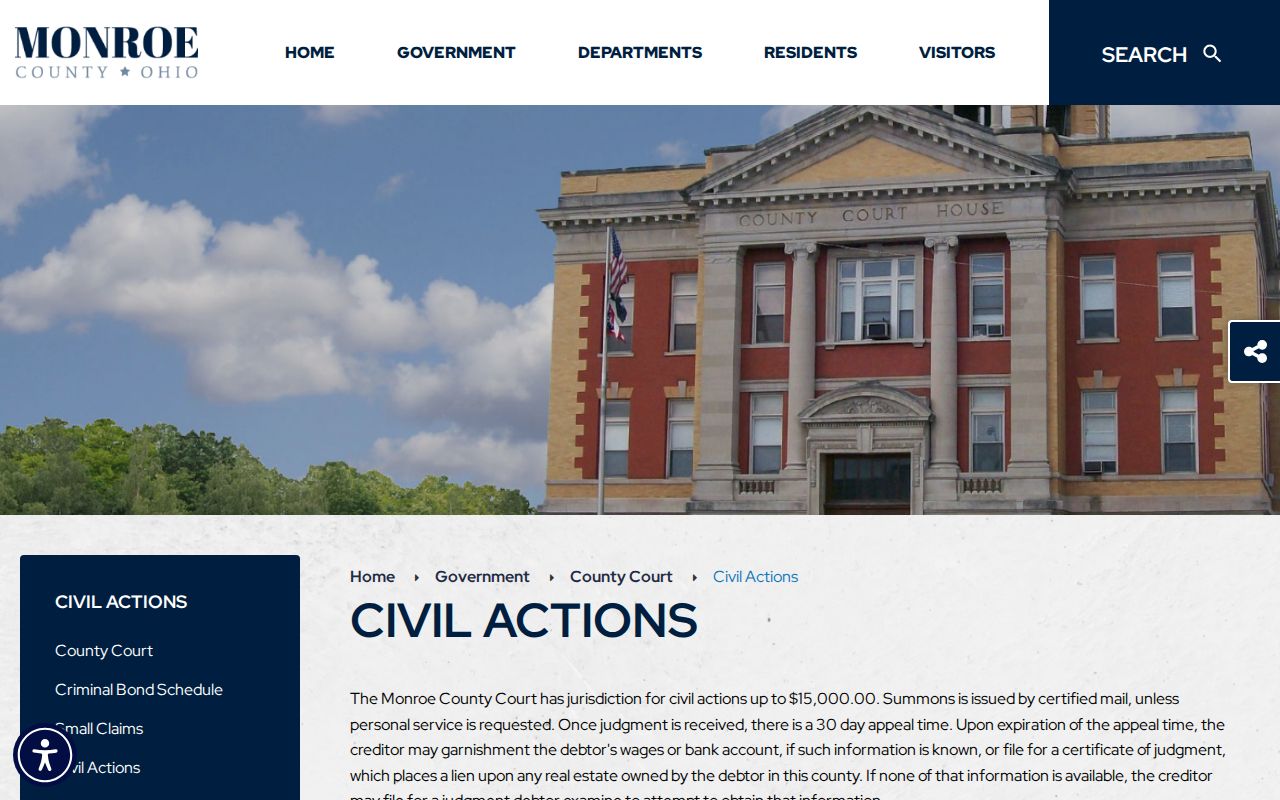
The local page ties the jurisdiction rule to real filing practice without ever promising that a CaseLook result equals a full document file.
Types of Civil Cases on the Docket
Monroe County Court's documented civil routes are matters within the $15,000 limit, small claims, and eviction. Common Pleas handles the higher and general civil route. Probate/Juvenile keeps separate probate records for estates, guardianships, trusts, adoptions, marriage licenses, name changes, and mental-illness matters. Court type is the practical first filter.
- County Court civil actions within its monetary jurisdiction
- County Court small claims
- County Court eviction matters
- Common Pleas major and general civil matters
- Probate division matters in its separate record system
Monroe County Civil Counterclaim Transfer
A Monroe County civil case can move midstream. Under R.C. 1907.03, a counterclaim over $15,000 forces the County Court to certify the case to Common Pleas. The court then sends the papers along with a certified transcript of its journal entries. So one civil docket may show a County Court start and a Common Pleas finish. That can happen instead of a single continuous record. The official statute page spells out that certification rule in full. If your docket search shows only the early filings, ask the clerk a question. Was the case certified? Do not assume the record is complete.
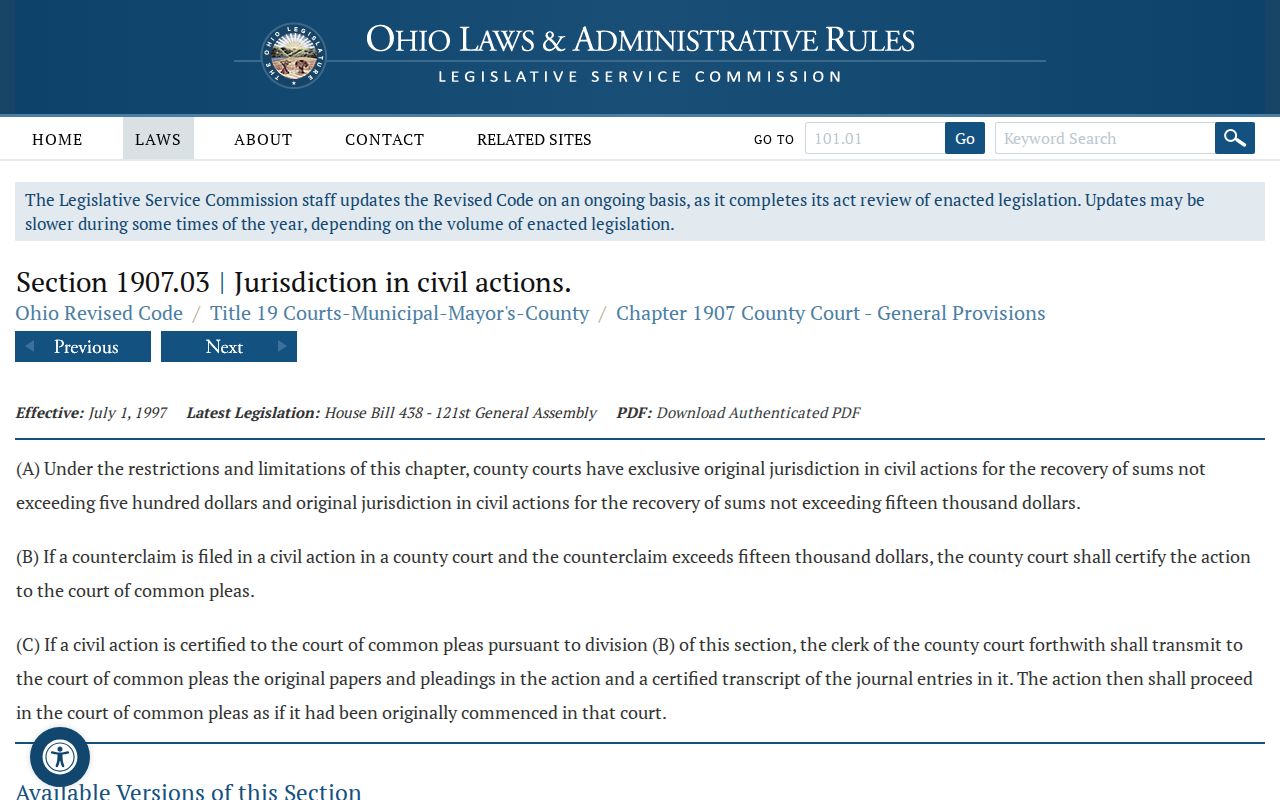
The statutory screen documents the transfer rule, which explains why a civil docket can jump from County Court to Common Pleas.
Monroe County Civil Service Route
Monroe County Court's Civil Actions page lays out the service step for a new civil case. Certified mail is the default. Personal service happens only when a party asks for it. An online Monroe County court docket may show later activity. But the docket will not always spell out the summons itself or the proof of service behind it. Treat a search result as one piece of the file, not the whole story.
The same page sets a 30-day window for a civil appeal. A counterclaim certification can shift where the case lives going forward. For the real filing history and pending dates, ask the court that currently holds the file. One caution on money: the $150 deposit, plus $10 for each added defendant, covers filing and service. It is not a charge for copies of the record.
Need to reach the lower civil court? County Court takes that call at 740-472-5181. Cases sitting in the General Division belong with the Clerk of Courts and Common Pleas. Fax filing has no local endorsement here. Common Pleas self-representation material says plainly that fax filings are not accepted.
An appeal out of County Court does not erase the original file. The receiving court or clerk can tell you which office holds the current papers and journal entries. So ask before assuming. The statutory counterclaim rule is another reason a lower-court docket search may miss something. It may miss the later Common Pleas side of a Monroe County civil case.
Settings and Hearings on Civil Dockets
For any civil hearing in Monroe County, start with the written notice or order in the case. CaseLook has a Hearing Date search field and a Calendar Search tab, though those calendar results can lag behind real court action and filings. The county itself warns that online information runs behind. Rely on the paper, then confirm.
Calling the right division settles most setting questions. County Court is 740-472-5181. Common Pleas lists 740-472-0841. Whether a decision has been filed is a question for the clerk, not the judge, per the Court of Common Pleas self-representation material. Monroe County posts no public daily docket, remote-hearing link, or local glossary of setting codes.
Monroe County Small Claims Date Route
Monroe County small claims runs on a simple division of labor. The Monroe County small-claims instructions describe it. The filer fills in the top of the form. That part covers contact details, a description of the claim, any exhibits, the amount, interest information, and the required signature. The clerk handles the lower portion and mails out the court date and time. Phone numbers matter here. They let the court reach parties about continuances or schedule changes. County Court is therefore the real authority on a small-claims hearing date. An older online docket entry cannot tell you whether a continuance moved things. Call the court directly to confirm.
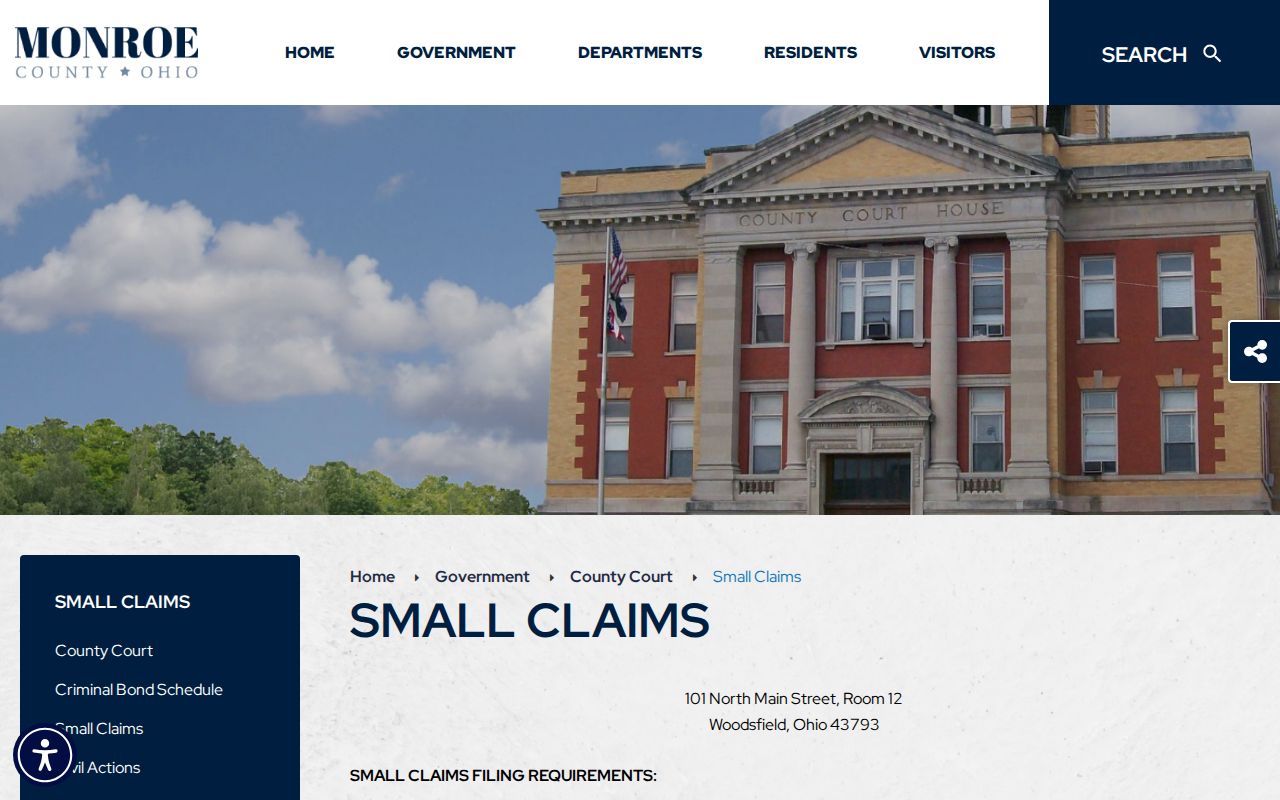
Under that process, the clerk assigns and mails the small-claims court date once the filing arrives.
Public Access to Civil Dockets
Ohio Superintendence Rule 11.10 presumes public access to court records, and Rules 11.11 through 11.14 separate direct access, discretionary remote access, redaction, and restrictions. Nothing in Rule 11.12 forces every filed civil document online. Keep one limit in mind: Monroe CaseLook's delayed computer-record information is not a certified copy.
Access rule: Sup.R. 11.09 through 11.14 govern court case-document access. R.C. 149.43 governs public-office records, while court case records use the judicial access framework.
Monroe County Small Claims Figures
The Monroe County small-claims page carries conflicting numbers. An older $3,000 sentence sits beside $6,000 context. The fee references disagree too. Reconciling those figures is a job for the clerk, not a web page. Before filing, call County Court. Confirm the current monetary limit, the filing amount, service cost, and form requirements.
Note: A county page with conflicting small-claims figures is no substitute for clerk confirmation. Call before a civil filing.
Monroe County Civil Filing Deposits
County Court's Civil Actions page describes a $150 deposit plus $10 for each additional defendant. That covers filing and service rather than record copies. The Clerk's Rule XII deposit page lists filing deposits as well. It includes a $200 amount for a non-domestic complaint or an answer and counterclaim. Neither figure tells you the cost of getting a copy of a court record.
Read the Clerk deposit page in that narrow context. For copy prices, certification, or a delivery route, ask the court holding the civil file.
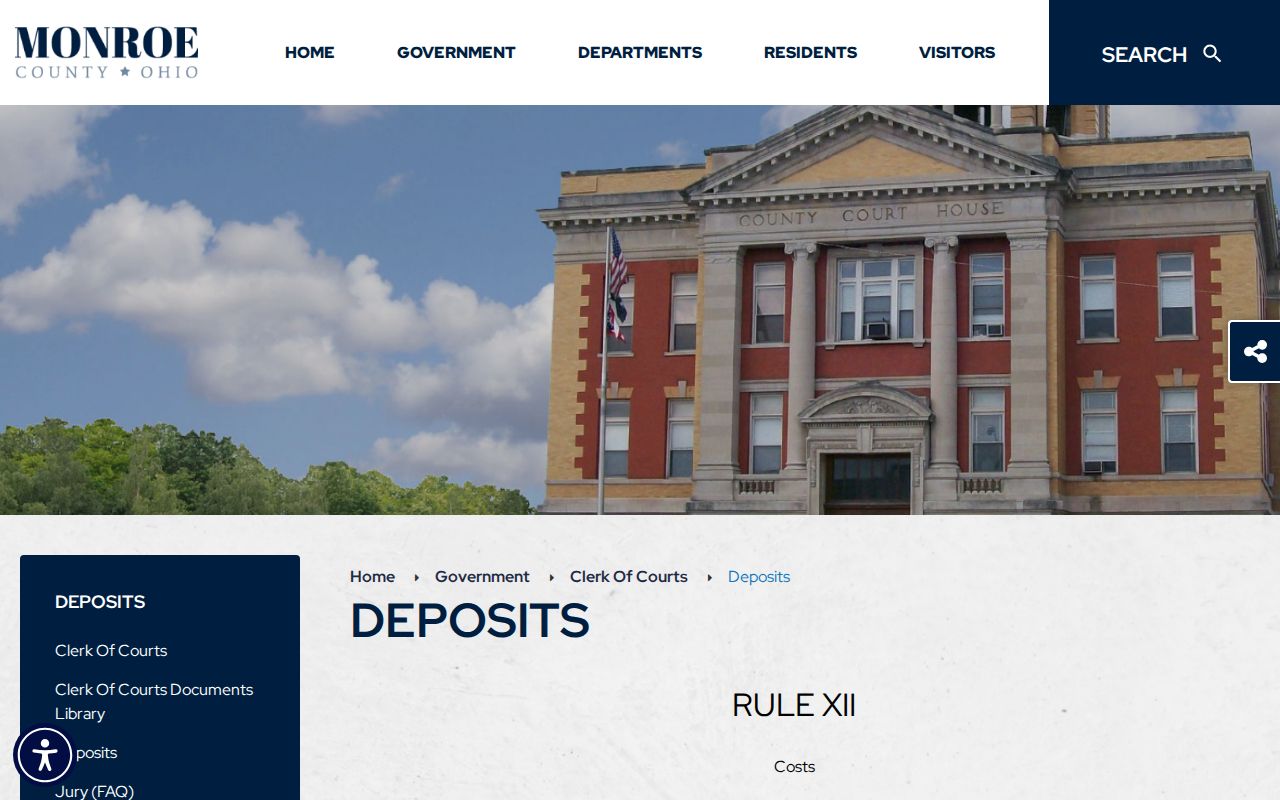
The local deposit listing supports a distinction between filing money and record-retrieval charges.
Monroe County Civil Filing Materials
The Clerk's document library gathers local rules and forms in one place. It helps with filing, but it does not amount to an online archive of CaseLook case documents. The Common Pleas self-representation page adds two practical rules: original filings need blue ink, and fax filings are not accepted.
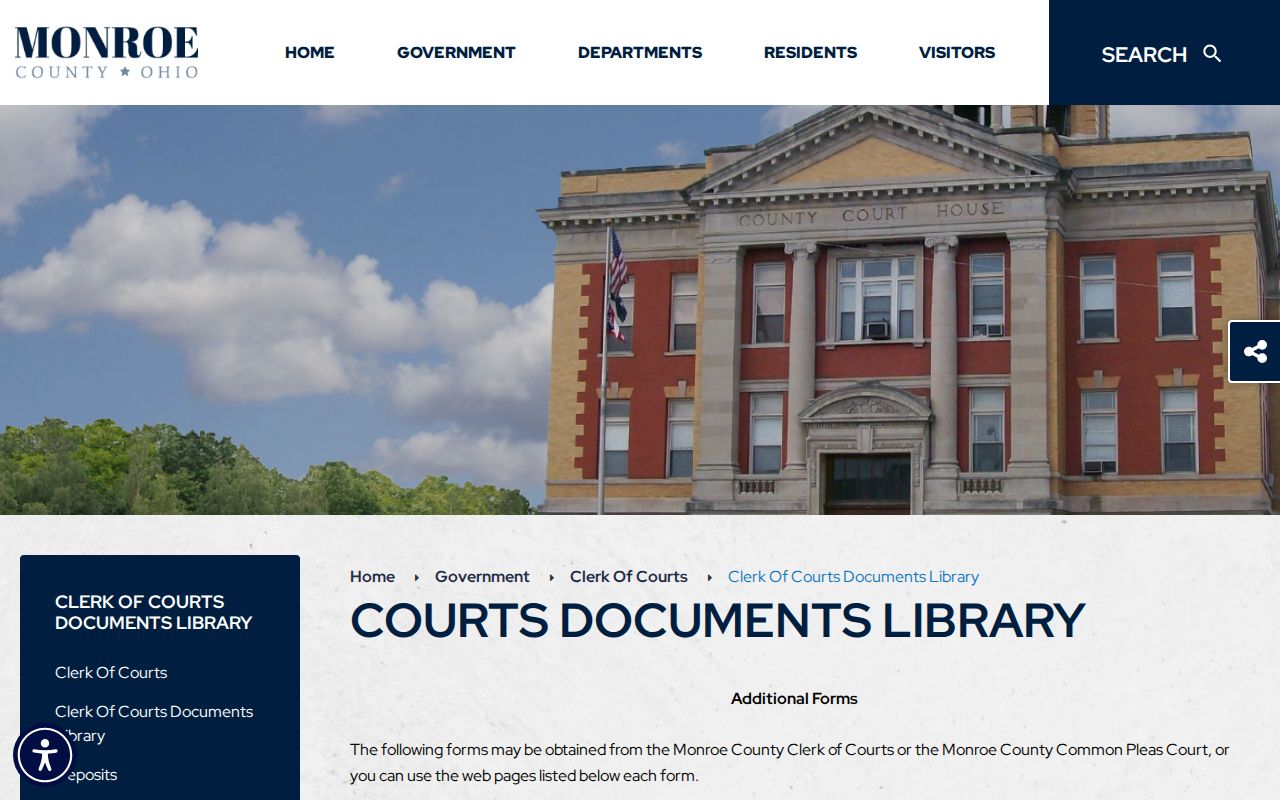
The library lists the local rules and forms a Monroe County civil filer needs.
The Common Pleas filing basics also send questions about a filed decision to the clerk.
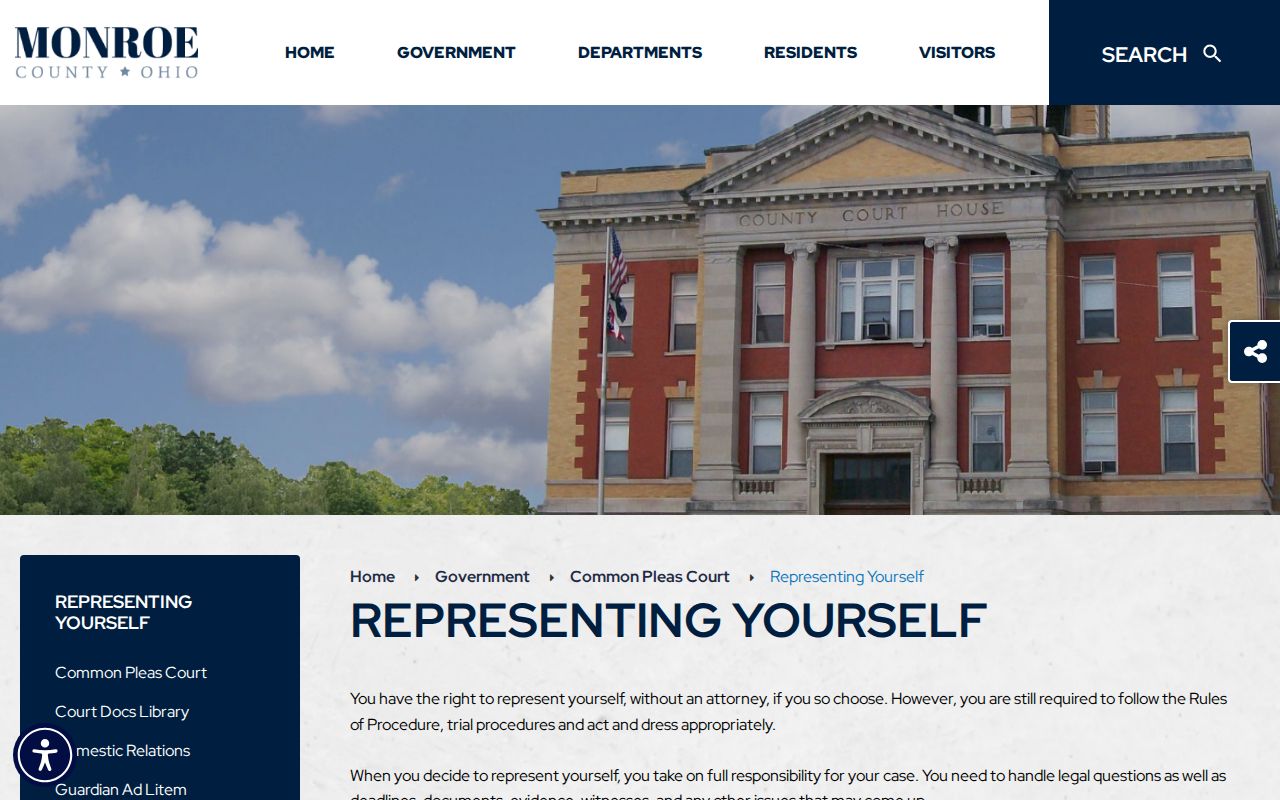
That page covers local filing rules only; it makes no promise of online civil-document images.
Monroe County civil matters start with picking the right Monroe County court. Lower civil actions go to Monroe County Court. The higher civil route runs through Monroe County Common Pleas. Probate records sit apart from any Monroe County CaseLook lead. A Monroe County filer should confirm current rules with Monroe County staff. Record requests go to the office holding the file. Court and clerk questions can point in different directions.