
How to Get Court Records
Figure out two things first: which court handled the case, and which record you need. CaseLook is the public computer-record search. It can help you spot a Common Pleas or County Court case number. For anything verified, though, go to the office that keeps the file. County Court maintains its own lower-court records. Common Pleas legal records run through the Clerk of Courts. Probate and Juvenile work from their own counter, indexes, and document-request route.
- Use the case number, party name, or local CaseLook search to identify the proper court when possible.
- For County Court, call or visit Room 12 and ask about the record type, restriction, certification, current price, and delivery route.
- For Common Pleas, start with the Clerk of Courts in Room 26 at 740-472-0761.
- For Probate, use the relevant index, submit the official request form when appropriate, and await court contact after the record is pulled.
- For Juvenile records, call Juvenile Court directly and do not presume remote access.
Monroe County Court Record Levels
Keep three levels of access separate in your mind. Level one is a CaseLook result or other online computer-record listing. It can lag behind the file, and it is never certified. Level two is a filed document itself, such as a complaint, motion, order, judgment, exhibit, or transcript, and it may be obtainable directly even when no image shows up online. Level three is a certified copy: an authenticated version you request from the court or clerk holding the original.
That split avoids a common mistake. CaseLook is a useful lead, not the official copy. A clerk can sort out certification and access. And a Common Pleas transcript is its own court-reporter request, with an estimate and prepayment, not a CaseLook download.
Types of Court Records
Court records here span more than one document type and more than one holder. County Court keeps traffic, misdemeanor, lower civil, small-claims, and eviction records. Common Pleas holds the felony, major civil, and General Division route. Probate and Juvenile maintain division-specific material. Every good request starts with the right record holder. Knowing the holder saves time.
- CaseLook computer-record information
- Filed complaints, motions, orders, and judgments
- Dockets and indices
- Certified copies from the court or clerk
- Probate/Juvenile index and document requests
Monroe County Clerk Record Counter
The Monroe County Clerk of Courts sits in Room 26. The address is 101 N. Main Street, Woodsfield, Ohio 43793. The published phone line is 740-472-0761. Listed hours are Monday through Friday, 8 a.m. to 4 p.m. This Clerk is the contact for Common Pleas legal records and the county CaseLook service. County Court, though, keeps its own lower-court records and payment procedures.
Monroe County Clerk of Courts
Room 26, 101 N. Main Street
Woodsfield, Ohio 43793
740-472-0761
That office card covers the Common Pleas record route only. It is not a claim that one counter handles every County Court, Probate, or Juvenile request.
What a Court Record Contains
Ohio Sup.R. 11.09 defines case documents broadly. Pleadings, motions, orders, judgments, journals, dockets, and indices all count, subject to exclusions. A record request can target one of those items rather than a whole case file. Remote inspection varies by document, and protected material can be unavailable.
| Docket or index | A chronological or index-level case reference; CaseLook is computer-record information, not certified. |
|---|---|
| Pleadings | Filed papers such as complaints, answers, or motions when accessible from the record holder. |
| Orders and judgments | Written court action, subject to access limits and any restriction. |
| Transcript | Separate court-reporter product for Common Pleas, with estimate and prepayment. |
| Certified copy | Authenticated copy issued by the court or clerk that holds the record. |
Monroe County Common Pleas Transcripts
Common Pleas transcript requests go straight to the court reporter. The reporter gives an estimate and requires prepayment. A transcript is not a clerk-certified copy, and it should never be routed through CaseLook. The court posts no transcript amount or general Common Pleas copy form online. The Common Pleas Court page is the official source. It carries that court's transcript procedure and contact information. Ask that court how a particular transcript request is handled before you pay.
Certified Copies and Fees
County Court posts the one local certified-copy figure: $1 per certified page. Its fee page states plainly that the figure was effective October 16, 2009. Treat it as a dated reference, not a promise of today's price. The Common Pleas side publishes no general plain-copy or certification price, record-search fee, delivery deadline, or copy-request form.
| Item | Published amount | Important limit |
|---|---|---|
| County Court certified copy | $1 per page | Posted effective October 16, 2009; confirm current price. |
| County Court civil filing deposit | $150 plus $10 each additional defendant | Filing deposit, not a copy fee. |
| Clerk Rule XII deposits | Amounts vary by filing | Filing deposits, not record-request fees. |
| Common Pleas transcript | Not posted | Estimate and prepayment through court reporter. |
The County Court cost sheet is the dated official source.
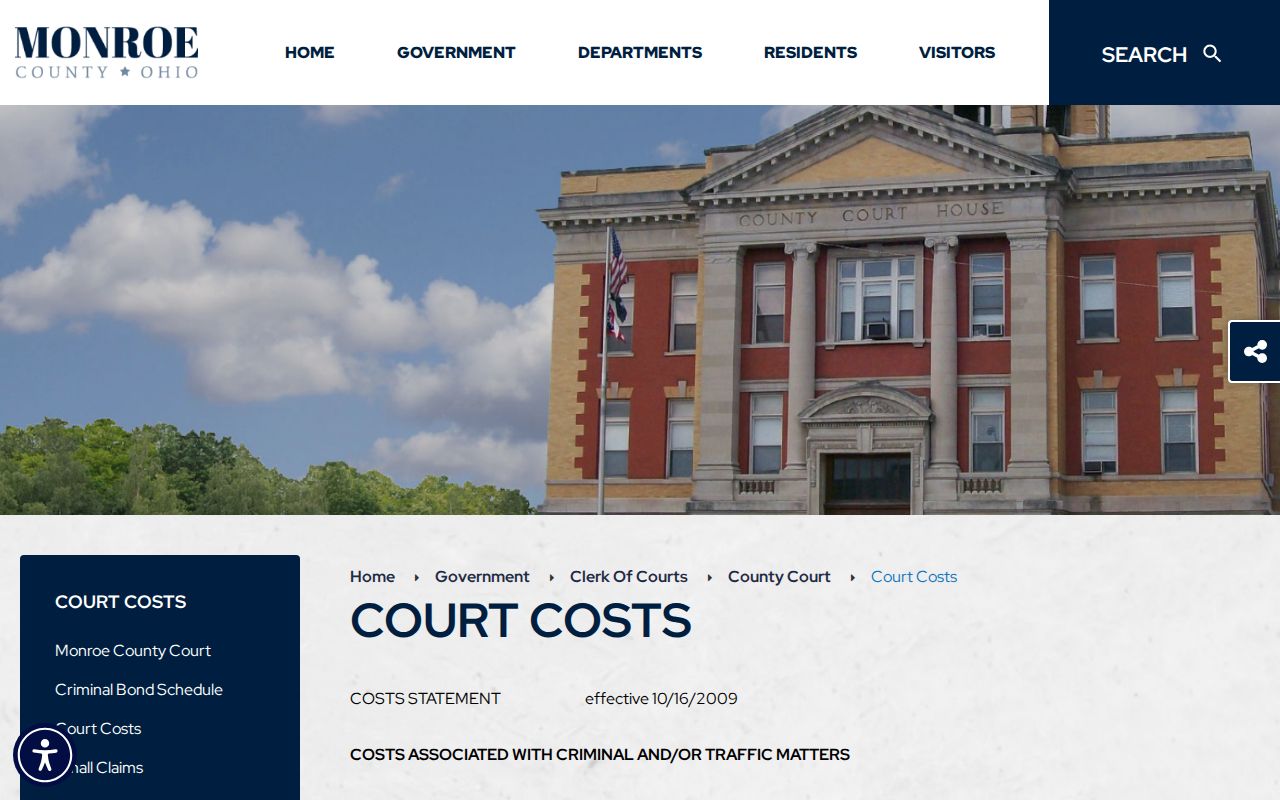
The capture preserves the effective-date warning alongside the certified-copy line.
Monroe County Probate Record Request
Probate and Juvenile use a record-request route of their own. It is not the general Common Pleas copy form. Begin with the relevant index. The county request form opens by asking what type of record you want: Marriage, Birth, Death, or Other. Its conditional pages then ask for details such as names, dates, Book/Volume, Page, and Case Number where they apply. The county says to wait for court contact after staff pull the record, then pay. The Probate/Juvenile request instructions walk through that route.
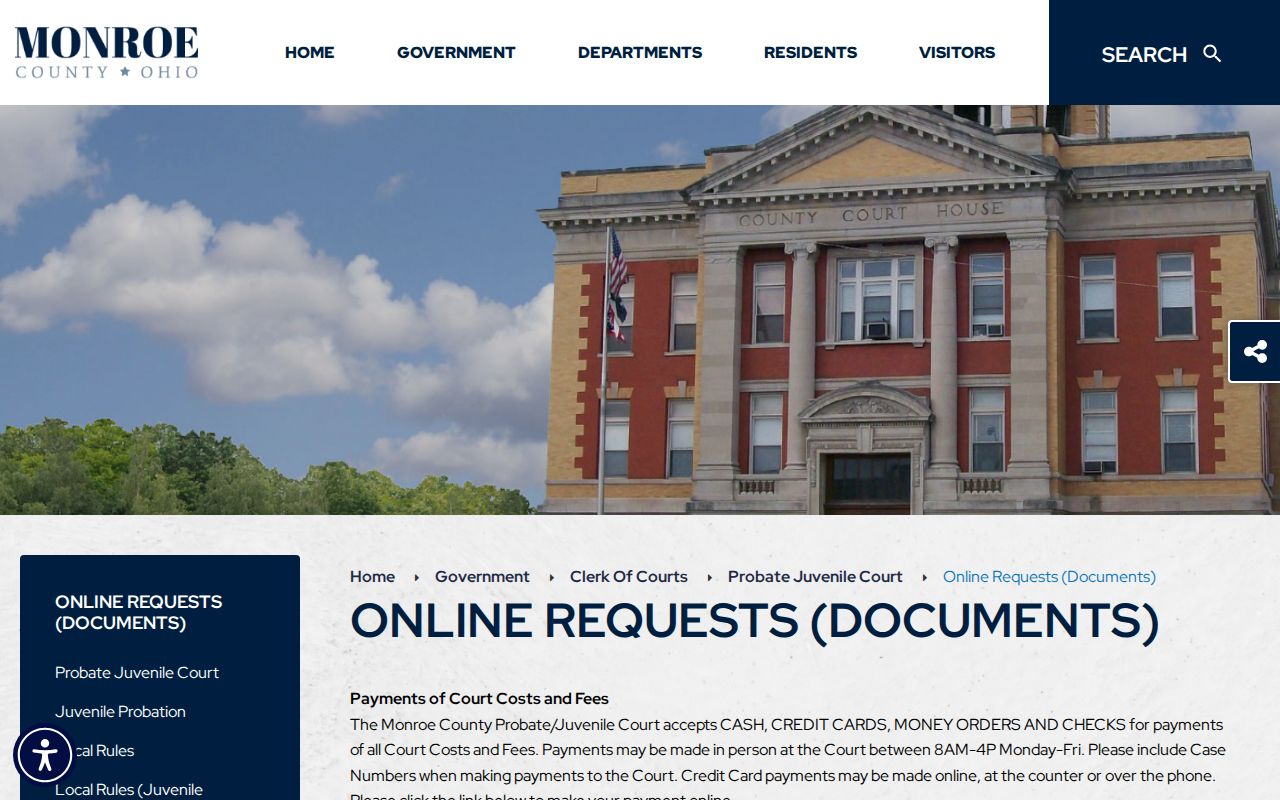
The docket path here runs through a division-specific request, not one universal online-copy route. Start from an index search of Monroe County probate records, then use the county-linked Probate/Juvenile request form, which lists the record categories you can ask for.
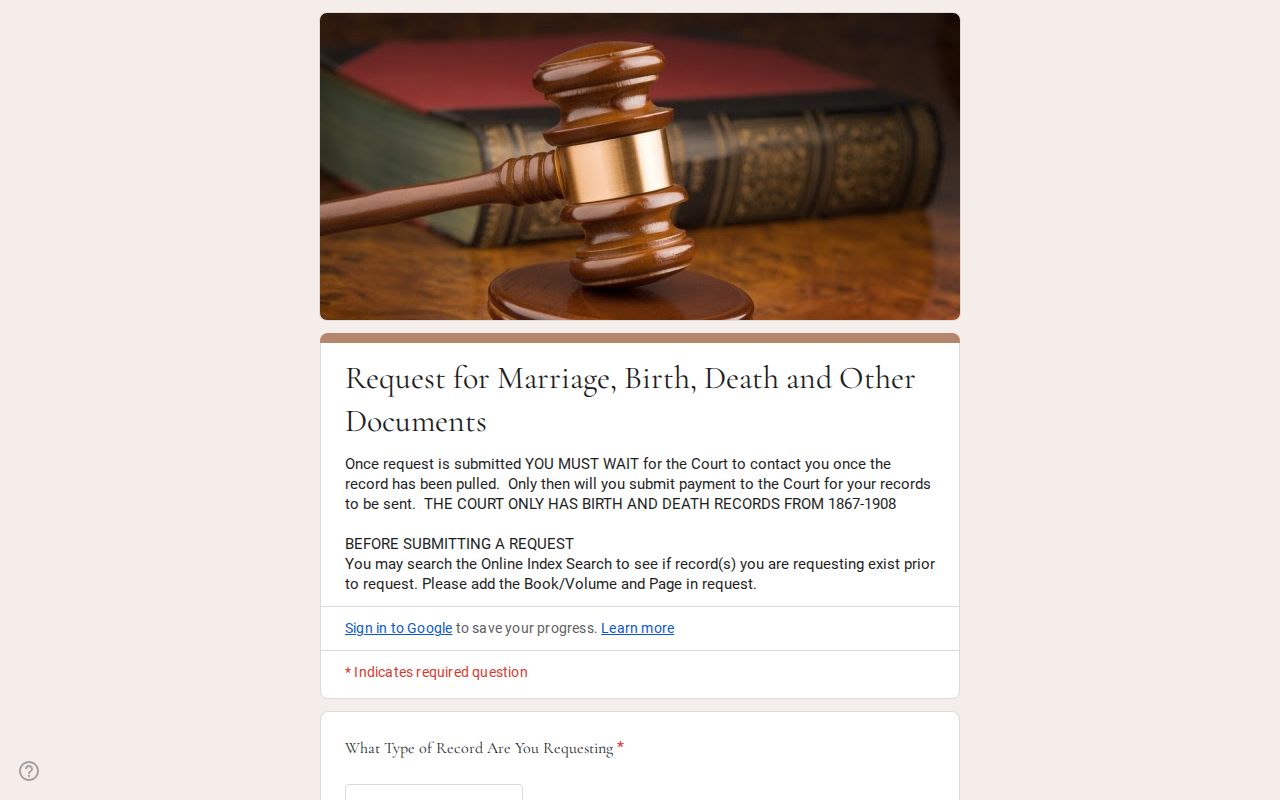
That form lists narrow record types. That focus matters. It isn't built as a catch-all request for Monroe County Court or Common Pleas files, so don't lean on it for court docket copies outside the Probate and Juvenile divisions.
Monroe County Court Archive Index
Probate/Juvenile splits its online index by era. The county-linked historic eSearch covers 1867 through 2002. Pick Guest Sign In to browse the indexes from home. The site suggests checking Certified Dates before you search. It also lists technical needs: cookies, JavaScript, popups, and PDF support. Documents can still be requested in person if the online route stalls. And it can stall, since the guest sign-in sometimes returns a 401 error.
The newer route is eServices, covering 2002 to the present. A JavaScript handshake can stop that form from loading. Treat either index as a starting point for archive work, not the finish line. The counter is where the actual documents come from. The time split is handy for historical research in Monroe County. Still, it is not proof that every record is digitized or reachable from home.
Probate/Juvenile sits in Room 39. The probate line is 740-472-1654. The juvenile line is 740-472-5790. Calling is the smart move whenever the docket index fails to return a record or online access breaks down.
Public Access and Sealed Records
Ohio's Superintendence Rules set the framework here. Rules 11.09 through 11.14 govern court-record access statewide. Rule 11.10 presumes the public can get in. Rule 11.11 requires direct access and copies within a reasonable time, and it allows actual costs or deposits. Rule 11.12 permits remote access without obligating a court to put every record online, and Rule 11.14 allows restrictions by motion or order.
Access authorities: Sup.R. 11.09-11.14 govern court records. R.C. 149.43 governs public-office records, while court case records use the judicial access rules. Sealed, restricted, juvenile, adoption, and protected domestic material can be unavailable.
Monroe County Court Direct Access
Under Sup.R. 11.11, direct access means going to the court or clerk to inspect and copy a Monroe County court record in person. Remote access works differently. CaseLook puts case information online. The county cautions that its computer records can lag. It tells anyone who needs verified information to ask the court or come in during regular business hours. A court may also keep its remote access narrower than what you get at the counter.
Redaction rules add another layer. Sup.R. 11.13 puts the duty to omit personal identifiers on the person filing a document, not on the clerk. Under Rule 11.14, a filer can restrict information in several ways. Redaction, initials, or a generic description in the register all work. A filer can also set remote-only limits or a restriction for a fixed time. So a public court docket does not always mean every document is fully viewable from home.
Copy charges deserve a clear head too. The card service charge for Probate and Juvenile filings is a surcharge on the payment channel, nothing more. County Court civil deposits and Clerk Rule XII deposits are filing amounts. None of them predicts what the record holder will charge to copy or certify a document. Ask before you count on any figure.
For the governing language on public records, the official R.C. 149.43 page covers the rules. It sets out what agencies must make available and what fees apply.
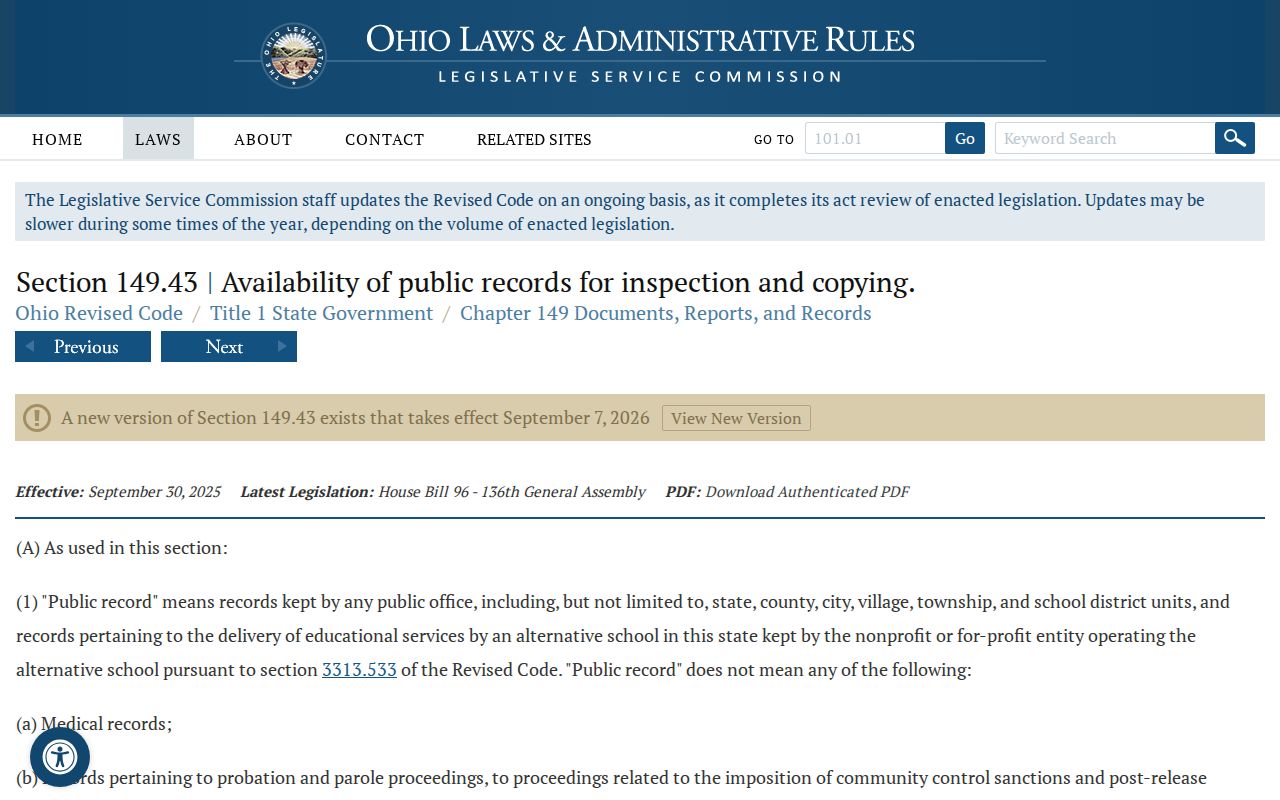
That statute governs records held by public offices. Court case access runs on the judicial rules described above instead.
Monroe County Probate Payment Limits
Probate/Juvenile's card-payment page is not a copy-fee schedule. Its county request page lists card service charges by tier. The tiers run $2 through $50, $3 through $100, and $6 through $200. A $9 tier runs through $300. Then add $3 for each additional $100. Those surcharges apply only to that Probate/Juvenile payment channel. They say nothing about Common Pleas or County Court record copies. Do not read a general copy price from a payment fee. Ask the record holder for the current amount and whether certification is available.
Monroe County Court Request Limits
Some gaps are simply gaps. Monroe County Common Pleas posts no current general certified-copy form, mail, fax, or email copy procedure, and no stated ID requirement, turnaround time, archival fee, public-terminal policy, document-image charge, or bulk-data product. Inventing a request process to fill those holes helps nobody. County Court adds confusion with a Room 12 statement on its location page while its CaseLook notice points to Room 35 for in-person requests. A phone call first is prudent. If a CaseLook lead needs an official follow-up, the local Monroe County case search route can identify the right court before you call.
Monroe County court records travel a court-by-court path. County Court holds certain lower records. The Clerk connects Common Pleas legal filings. Probate and Juvenile keep separate record and request routes. A certified copy always comes from the holder of that record. Remote CaseLook data cannot replace the court's own file. Every record belongs at its own counter.